The disc brake rubs after removing the wheel
Before transportation, the brake was quiet, after installing the wheel, the disc touches the pads. Start by installing the wheel and inspecting the gap: adjusting the brake makes sense when the wheel is standing properly.
When you can't go
Here we are talking about a disc brake: a metal disc on the sleeve passes between the pads in the brake caliper. For rim brakes, the order is different. Hydraulics are controlled by the fluid in the hose, the mechanical brake is controlled by the cable; their further adjustment varies.
SRAM disassembles the failure of the handle separately from the friction of the pads. Elimination of rustling by itself does not confirm the serviceability of the brake.
1. Check how the wheel is installed
Let the brake cool down. Inspect the fit of the wheel in the frame or fork and the axle attachment. After the machine or transportation, check that all the end adapters provided by the sleeve are in place.
- If you know how to remove this wheel, reinstall it according to the instructions of the bike and axle. The disc should gently fall between the pads without effort.
- Close the eccentric or tighten the through axis in the prescribed manner and torque. Do not use additional axle force as a way to remove friction.
- Make sure the wheel is secured. Lift it in a stable way and carefully spin it by hand by the tire. Keep your hands away from the disc and spokes.
If you are not sure about the fixation or the wheel does not stand up freely, stop and contact the service. Park Tool starts diagnostics with the correct landing of the wheel: it can cause friction even with a working caliper.
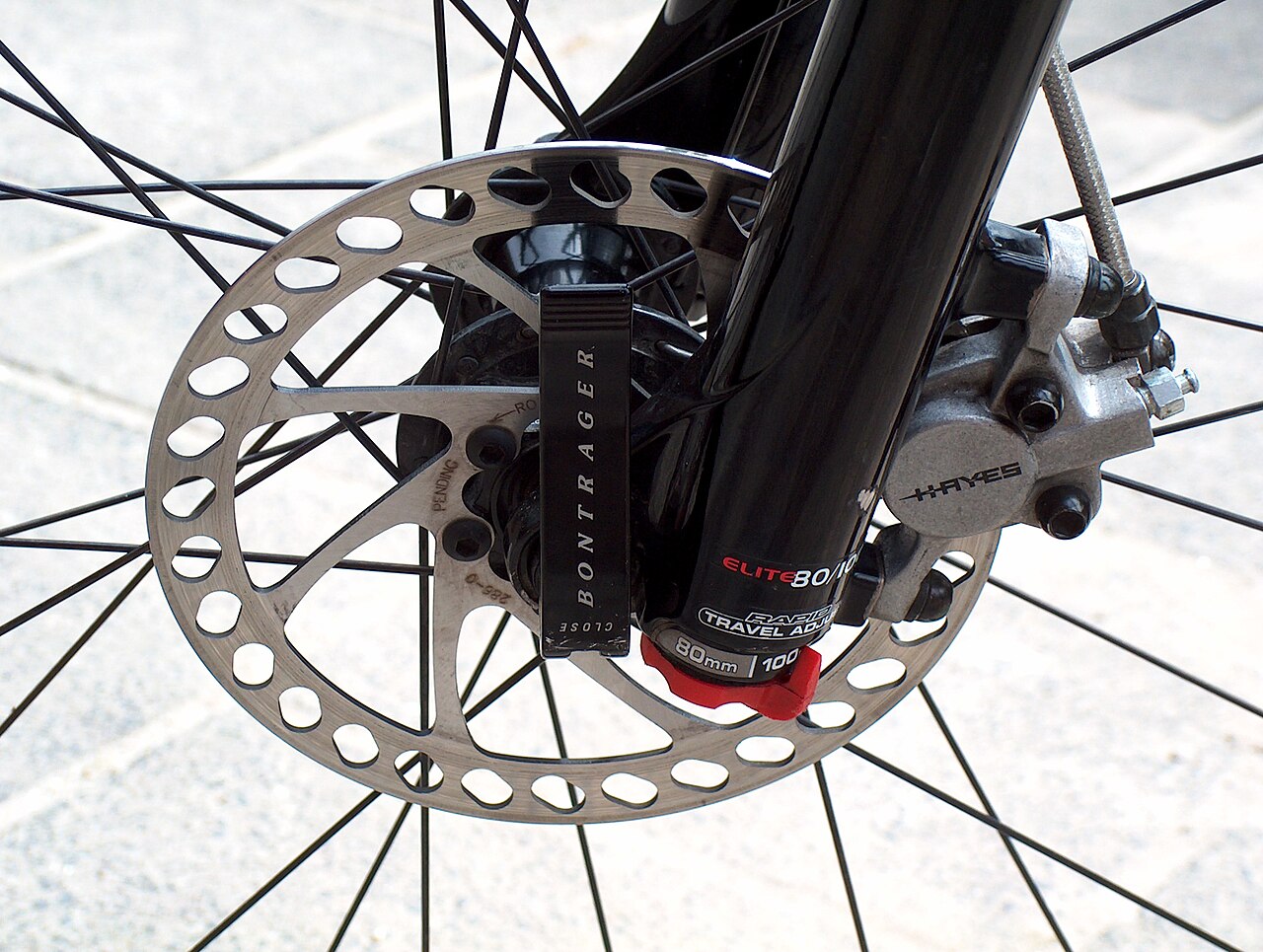

2. See exactly where the disk is touching
Illuminate the caliper with a flashlight from the opposite side, without bringing anything to the rotating wheel. Look at the gap between the disc and each pad. Do not touch the work surface with your fingers.
- It snorts almost the entire turn
- Possible displacement of the caliper, too narrow a gap or uneven return of the pistons. You still need to start with landing the wheel.
- Touches in one place per turn
- If the disk simultaneously deviates noticeably sideways, you need to check its beat. This is an observation, not a reason to buy a new disc right away.
- The gap changes when the fixed wheel is rocked
- Possible backlash of the sleeve or mounting problem. Adjusting the caliper will not eliminate the source of movement.
The Park Tool lists these reasons along with the jammed pistons in Hydraulic brake alignment guide. Do not drive the disc with pliers and do not loosen the wheel for the sake of silence.
3. Remember if the handle was pressed without a wheel
In a hydraulic brake, pressing the handle without a disc and a suitable spacer can bring the pads closer together. If the disc does not fit between them now, do not force it through and do not separate the pads with a screwdriver.
The return of the pistons is carried out according to the instructions of a specific brake with a suitable tool. In the SRAM procedure removal of pads, the corresponding spacer and work with pistons are provided. This is a service operation: the universal command "press the handle a few more times" is not suitable here.
Next time, put a transport spacer recommended by the manufacturer during transportation. SRAM explains the consequences of pushing without a wheel in a memo about disc brakes.
4. Do not start with pumping and lubrication
If the wheel is installed correctly and the friction remains, the next step depends on the reason: leveling the caliper, checking the disc, servicing the pistons or eliminating backlash. Pumping is not a universal solution to shorting.
Do not apply oil to the disc or pads and do not spray chain grease nearby. If the brake screeches and brakes poorly at the same time, report it separately: a check of contamination and condition of the pads is required. SRAM explains the effect of oil and cleaners on pads.
It is worthwhile to independently adjust the mounting of the caliper only if you have the instructions of your model, the right tool and experience. The moment of bolts, washers and the sequence of actions is determined by the manufacturer. For a cable brake, use its instructions, not the procedure for hydraulics.
5. What to order in the workshop
Required service — diagnosis of disc brake friction with checking the installation of the wheel, the runout of the disc, the clearance of the pads and the operation of the pistons. In in the catalog, select "Brakes" and your city; by default, this is St. Petersburg. Examples from the catalog: Crazy Pedros Workshop and Birota. Confirm the service of your model when recording.
After the work, ask to check the fixation of the wheel, the fastening of the brake and the absence of leaks. On the spot, check that the brake is holding the bike; then, if everything is working properly, brake at low speed on a free flat area. The quiet rotation of the wheel is only part of the test.
Sources and boundaries of verification
The material was prepared by the FATRACING editorial office for technical manuals. The inspection by the invited mechanic has not yet been carried out. The instruction of your model determines the order of maintenance, tightening torques and compatibility.
- Park Tool: Hydraulic Disc Brake Alignment — wheel installation, clearance, runout and backlash.
- SRAM: Disc Brake Troubleshooting — pistons, failure of the handle, contamination of the pads.
- SRAM: 9 Important Things To Know About Road Disc Brakes — Handle without wheel installed.
Sources verified on October 9, 2026. Workshops are listed according to the specializations of the catalog; they did not check this article.