The steering plays: how to find the source of the knocking
Apply the front brake and shake the bicycle — it knocks from the front. The source could be the headset, but this test alone does not determine the cause. It's important to find the location of relative movement of parts.
When to stop riding
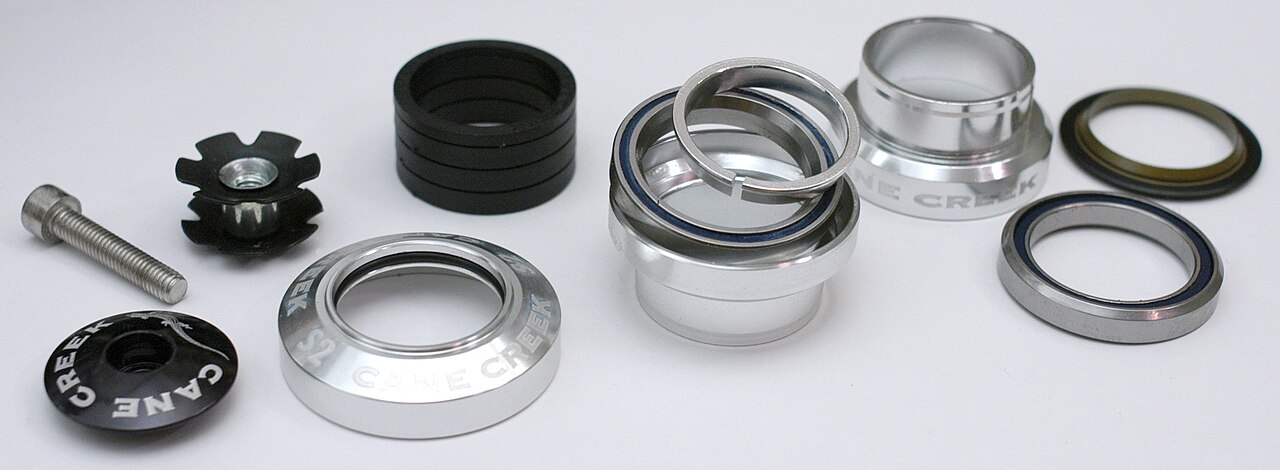
The headset is a bearing assembly in which the fork rotates relative to the frame. The stem connects the handlebars to the fork steerer. The article helps to describe the symptom; disassembling the fork is not required here.
1. Localize the knock in place
Put the bike on the ground. Hold the front brake and gently sway the bike back and forth, without a strong jerk. If the brake does not hold, stop the test and deal with brake diagnostics.
With a stationary wheel, you can place your finger outside on the border of the upper steering cover and the frame to feel the relative movement. Do not insert your fingers into the gaps. If it is inconvenient to hold the brake at the same time, ask for help.
Park Tool warns, that the knocking during such swaying can be caused by both the brake and the suspension fork. Record where you feel the movement; if the source is unclear, do not call it a confirmed headset play.

2. Check the smoothness of the turn
Steadily lift the front part of the bicycle if you can do it safely. Slowly turn the handlebars in both directions. Note any noticeable resistance, a step near the straight position, or repeated catching. Check if movement is restricted by a taut hose or cable.
On Park Tool manual, too much preload and damaged bearing surfaces can interfere with smooth turning. The combination of play with tight rotation requires inspection; simply tightening the clamp is not a reliable solution.
3. Why can't you just tighten the top bolt
On a conventional threadless stem, the top cap sets the preload of the bearings, and the side bolts of the stem secure the stem on the steerer tube. Park Tool explains the difference between these functions. The order of adjustment matters.
The threaded steering device is different. Additional requirements may apply to a carbon post, internal wiring, and branded cockpit. Do not use someone else's tightening torque and do not loosen the extension without instructions, tools, and the skill to restore a secure mount.
Write down whether you recently removed the stem, changed spacers, or transported the bike with the handlebars disassembled. This context will help the mechanic check the assembly.
4. What service to look for
Needed diagnostics of play and knocking of the steering assembly: installation and pretension, condition of the bearings, attachment of the stem and steerer tube. Checking the fork or brakes is added if movement is found there.
Open it workshop directory and choose a city. There is no separate 'Steering' filter in the catalog, so specify the service when making an appointment. For example, you can contact Birota; confirm compatibility with your cockpit directly.
After repair, ask to check for play, free rotation, and handlebar locking. The disappearance of knocking with the handlebars stationary is only part of the result.
Sources and boundaries of verification
The material was prepared by the FATRACING editorial office for technical manuals. The inspection by the invited mechanic has not yet been carried out. The instruction of your model determines the order of maintenance, tightening torques and compatibility.
- Park Tool: Threadless Headset Service — signs of play, preload and alternative sources of noise.
The source was verified on October 9, 2026. The order of recording observations is editorial; adjustments are made according to the instructions of their design. The workshop did not check the text.