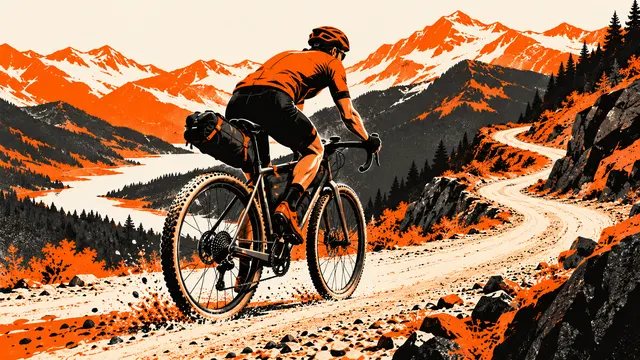
23–24 January 2027 · Veliky Novgorod
ЗИМНИЕ ВЫХОДНЫЕ ВЕЛОКРОССА · 3ВВ
Два дня ТИПАЦИКЛОКРОССА: Cyclocross, Gravel, Fixed gear, МТБ и беговой кросс. Один день или оба.
23–24 January 2027 · Veliky Novgorod
Два дня ТИПАЦИКЛОКРОССА: Cyclocross, Gravel, Fixed gear, МТБ и беговой кросс. Один день или оба.
19 June 2027 · Batetsky
Tsar Grader 202725 October — 7 November 2026 · XCnews
INOCROSSApril 10-11, 2027 · Veliky Novgorod
Spring Cyclocross WeekendFrom 22 November 2026 · Saint Petersburg and the Leningrad Region
WINTER CUP XCNEWS499 ₽ / month · Для гонщиков
FATRACING PREMIUMОт 2 999 ₽ / month · For business
FATRACING PROIn cyclocross, the tire is chosen for the grip on a particular lap, and the pressure is specified on your bike. Start with check-in clearance and system compatibility. Then evaluate the coating and only after that compare the tread pattern: the universal figure from someone else's race report does not take into account your weight, rim and installation method.
Write down the model and size of the tire, the inner width of the rim, the installation method and pressure limits. Check the rim requirements, including hookless, and the suitability of the tire for tubeless use. The Tubeless Ready label on one component does not yet confirm the compatibility of the entire kit.
Read the limits of your credit separately and measure the available gaps in the frame and fork. A narrow dry tire on the rack can get stuck dirt on the track. Participation in the amateur category does not cancel the requirements of the wheel manufacturer. Reference list Schwalbe It helps to understand the sizes and combinations, and the requirements of the competition determine its position.
Inspect the turns on the grass, ruts, cross slopes, roots and braking points. A couple of meters of deep mud does not always require the same rubber as a circle almost entirely covered with viscous soil. At the same time, a short dangerous section can determine the choice if it is impossible to go around it and it regularly leads to loss of control.
It is useful to divide the observations into three questions: where the wheel slides along the movement, where it goes sideways and where it is possible to hit the rim. These problems may require different solutions. If the tire accelerates well on a straight line, but does not keep the selected line in the turn, one win in the roll does not make it a good choice for the whole lap.
Look at the center track, the side grounders and the distance between them. A low frequent pattern is usually chosen for firmer and faster conditions; pronounced open — when you need to cling to soft ground and get rid of dirt. But the composition of the rubber, the frame and the actual shape of the tire on the rim also affect the sensations.
Compare the purpose of a particular model with the manufacturer. For example, Panaracer CG CX TLR described as an all-weather cross-country version; this is the manufacturer's statement of purpose, not the result of our comparative test. Before buying, match it with the coating and limitations of your wheel. Do not select a model based only on the word "mud" in the store card.
Schwalbe relates pressure selection to load and width and reminds of the limits of a particular system. Our general guide helps to collect raw data. Feeling "soft" without measurement is not well suited for comparing two attempts.
For a camera system, consider the risk of pinching the camera on impact. For tubeless — side retention, loss of air in the turn and the condition of the sealant. The tube has a different design and mounting method: the discussion of pressure on it cannot be transferred to the clincher wheel. Do not attempt to repeat the professional setup without repeating the equipment and conditions.
If the tubeless loses air already in preparation, first find the reason for diagnostic guide. Just topping up the air before the starting whistle is a bad way to test reliability. It is more useful to come to the first start with a proven system than to collect an unknown combination for the first time the day before.
Save the tire model, size, rim, installation method, pre-start pressure and soil description. Add specific behavior: demolition of the front wheel on wet grass, blows on the roots, steady passage of the track. Such a record helps to make the following decision; the assessment "rubber does not go" hides too many different reasons.
Repeat the setting when the route and weather change. Once found, the option does not become mandatory for the whole season. The key result is the controlled behavior of the bike, and not the minimum figure on the pressure gauge.
Upcoming races and useful sections of FATRACING.
Instagram belongs to Meta Platforms Inc., whose activities are recognized as extremist and banned on the territory of the Russian Federation.