23–24 January 2027 · Veliky Novgorod
ЗИМНИЕ ВЫХОДНЫЕ ВЕЛОКРОССА · 3ВВ
Два дня ТИПАЦИКЛОКРОССА: Cyclocross, Gravel, Fixed gear, МТБ и беговой кросс. Один день или оба.
23–24 January 2027 · Veliky Novgorod
Два дня ТИПАЦИКЛОКРОССА: Cyclocross, Gravel, Fixed gear, МТБ и беговой кросс. Один день или оба.
19 June 2027 · Batetsky
Tsar Grader 202725 October — 7 November 2026 · XCnews
INOCROSSApril 10-11, 2027 · Veliky Novgorod
Spring Cyclocross WeekendFrom 22 November 2026 · Saint Petersburg and the Leningrad Region
WINTER CUP XCNEWS499 ₽ / month · Для гонщиков
FATRACING PREMIUMОт 2 999 ₽ / month · For business
FATRACING PROCounting chainrings tells you little on its own: two 1x setups can differ more than a 1x and a 2x. Start with the lowest gear, then check the highest gear and the steps in between. Those three checks are more useful than choosing a side in the single-versus-double debate.
Write down three situations: your hardest climb, your usual cruising speed and a fast section where you still want to pedal. Include luggage and surface conditions. Small cadence changes matter on steady group rides; a sufficiently low gear matters on slow climbs with bags.
A 1x drivetrain removes the front derailleur and the decision about which chainring to use. A 2x drivetrain gives another way to combine low climbing gears with useful intermediate ratios. The actual result depends on the chainring and cassette tooth counts: a 2x label alone does not promise easier climbing.
A gear ratio is the front tooth count divided by the rear tooth count. With the same wheel, a lower ratio means less distance travelled per pedal revolution. Range is the highest ratio divided by the lowest, multiplied by 100%. It describes the spread, rather than where that spread sits.
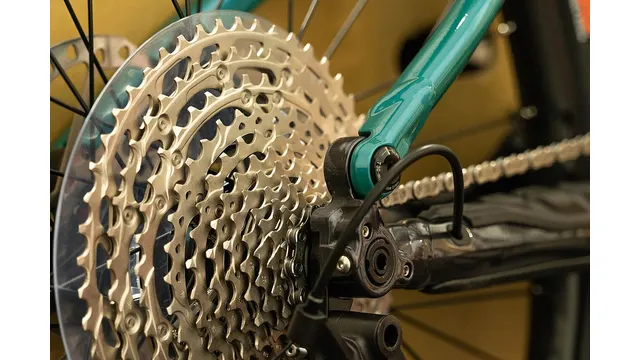
Cassette steps describe the change between adjacent sprockets. Shifting from 15 to 17 requires a cadence increase of about 13.3% to maintain road speed; 15 to 16 requires about 6.7%. To judge a whole cassette, you need its complete sprocket sequence, not just its smallest and largest cogs.
These are arithmetic examples, not ready-to-order compatible builds. The second 1x option has a lower climbing gear than the illustrated 2x. The first 1x has a substantially higher lowest gear than either. Add your wheel size in the Drivetrain calculator.
If one gear feels too hard at your cruising speed and the next too easy, look at the middle of the cassette. Keep wheel size and road speed identical when comparing options. It is possible to get the climbing gear you need while retaining awkward jumps in the gears you use most.
Some 2x ratios overlap or sit close together, so 24 shift positions do not mean 24 evenly spaced, unique gears. Think about a practical shifting sequence and follow your drivetrain instructions on cross-chaining. Not every mathematically possible chainring-and-sprocket combination is intended for use.
Converting 1x to 2x involves more than buying a front derailleur. The frame and mount, shifter, crankset chainline and sometimes cable routing must all work together. A larger cassette requires checks on maximum sprocket size, derailleur capacity, freehub and chain.
Save two calculations first: your current setup and the proposed one. Then list exact part numbers and check the manufacturer's compatibility charts. If the existing drivetrain mostly works for you, a chainring change may be a smaller intervention, but it shifts the entire range up or down rather than changing only one end.
For terminology and examples of production configurations, see Shimano's guide to 1x and 2x. Our figures above come from tooth-count arithmetic; they are not drivetrain test results or a promise that you will ride a particular climb.
Upcoming races and useful sections of FATRACING.
Instagram belongs to Meta Platforms Inc., whose activities are recognized as extremist and banned on the territory of the Russian Federation.