Disc brakes squeak: sound and braking
The brake squeals in the rain, after washing, or with new pads. To begin with, you need to divide two observations: when the sound appears and whether the usual braking force is preserved.
When you can't go
The guide refers to disc brakes. For rim brakes, other working surfaces and pad installation are checked.
1. Does the sound appear when you press or without pressing?
If there is a rustle when the wheel is freely rotating and the lever is released, start with disk friction checks. If the sound occurs when braking, note which brake is noisy and when it started.
For service booking, useful circumstances include rain, washing, chain lubrication near the brake, replacement of pads or disc. Note if the sound repeats in dry conditions. Don't record video with your phone in hand while moving.
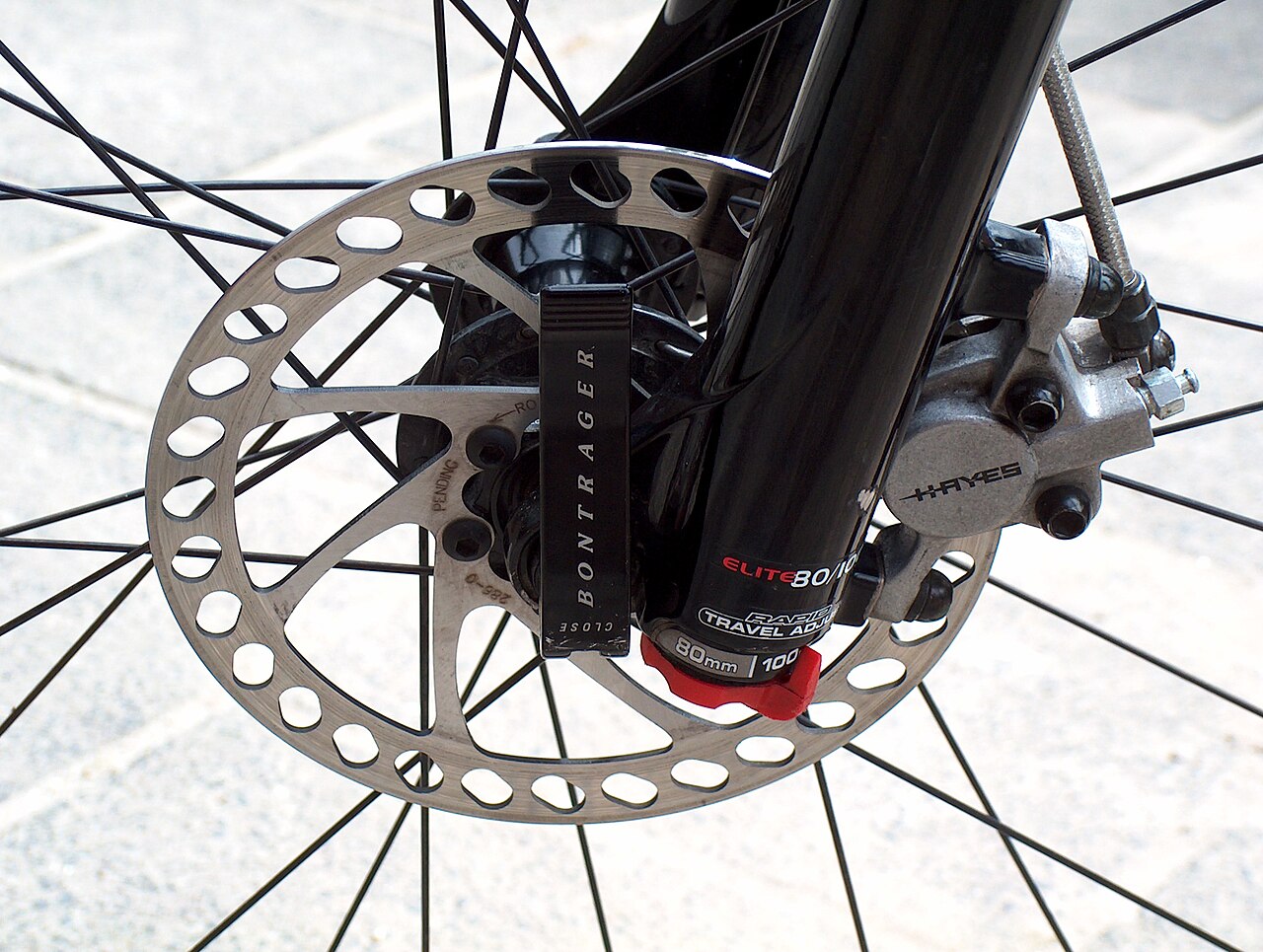

2. Inspect the cooled brake
- Let the disc cool down. Check for visible damage and oil marks without touching the braking surface with your fingers.
- Specify the brake model and the installed disc. Find the criteria for wear of the pads and disc in its instructions.
- If there is suspicion of oil, inform the technician separately. Cleaning the visible surface does not prove that the pads have been restored.
Shimano warns about the loss of braking when oil gets on the pads and disc. Do not spray 'antisqueak', WD-40 or lubricant and do not heat the pads over a fire.
In SRAM memo on rotor noise Isopropyl alcohol is recommended for cleaning the disc, while cleaners with additives are not recommended. This is a recommendation for the corresponding SRAM component; check the maintenance method for the entire brake with your model's manual. Do not cool a hot disc with water.
3. Remember the replacement of pads and the weather
SRAM notes, that water and dirt can cause temporary noise, and new pads and discs require the provided break-in. But the disappearance of the sound after drying does not replace checking the braking.
If the problem started after installing new parts, check if the break-in procedure was performed and if the parts are compatible. Perform the break-in according to the manufacturer's instructions only with a working brake, in a clear, safe area. A brake that barely slows down the bike or has a leak must first undergo diagnostics.
Don't buy a larger disc to fix a squeak before checking frame, fork, and brake compatibility. The initial request to the mechanic is to find the cause of the noise.
4. What to order at the workshop
Select brake workshop in your city. Example from the catalog — Crazy Pedros Workshop. When booking, specify the work with your model.
Request noise diagnostics with brake force check: condition and contamination of the pads, condition of the disc, installation and honing. Agree on replacement of parts after inspection.
After servicing, ask for an explanation of the reason and procedure for checking braking. Silence alone does not mean everything is working properly.
Frequent questions about squeaking brakes
- Why does it squeak after rain?
- Water and dirt can temporarily change the sound. If braking has worsened, there is a leak or the handle is failing, do not attribute this to the weather. The causes of temporary noise are described in the SRAM instructions above.
- What to do after replacing the pads?
- Check compatibility and perform the brake adjustment according to the manufacturer's instructions. Adjusting a working brake and removing contamination are different tasks; a weak brake first requires diagnosis.
- Is it possible to eliminate squeaking with grease?
- Do not apply grease to the working surface of the disc and pads. When chain maintenance Use spot application and do not spray oil near the brake. Quiet sound after treatment does not prove preserved braking force.
If the lever reaches the handlebar, proceed to separate handlebar movement diagnosis, and not to eliminate the sound.
Sources and boundaries of verification
The material was prepared by the FATRACING editorial office for technical manuals. The inspection by the invited mechanic has not yet been carried out. The instruction of your model determines the order of maintenance, tightening torques and compatibility.
- SRAM: rotor noises — cleaning and handling the disc.
- SRAM: Disc Brake Troubleshooting — noise, water and running-in.
- Shimano: Hydraulic Disc Brake User Manual — oil and condition check.
The sources were verified on October 9, 2026. The workshop did not participate in checking the material.