23–24 January 2027 · Veliky Novgorod
ЗИМНИЕ ВЫХОДНЫЕ ВЕЛОКРОССА · 3ВВ
Два дня ТИПАЦИКЛОКРОССА: Cyclocross, Gravel, Fixed gear, МТБ и беговой кросс. Один день или оба.
23–24 January 2027 · Veliky Novgorod
Два дня ТИПАЦИКЛОКРОССА: Cyclocross, Gravel, Fixed gear, МТБ и беговой кросс. Один день или оба.
19 June 2027 · Batetsky
Tsar Grader 202725 October — 7 November 2026 · XCnews
INOCROSSApril 10-11, 2027 · Veliky Novgorod
Spring Cyclocross WeekendFrom 22 November 2026 · Saint Petersburg and the Leningrad Region
WINTER CUP XCNEWS499 ₽ / month · Для гонщиков
FATRACING PREMIUMОт 2 999 ₽ / month · For business
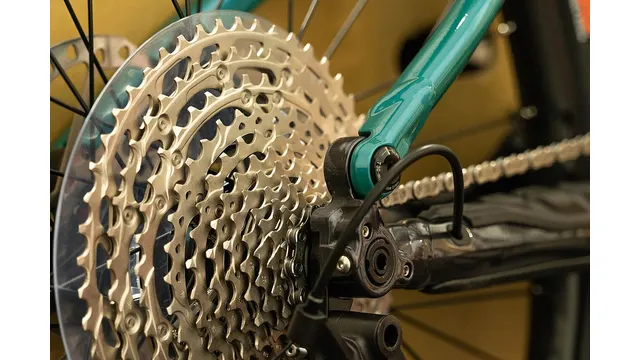
FATRACING PROIf your lowest gear is too hard, replacing only the cassette may look attractive. Compare the proposed gear with your current one, then check five independent requirements. A larger sprocket does not establish that your derailleur can handle it.
Record the model codes of the shifter, rear derailleur, cassette and chain, plus the number and tooth counts of the chainrings. Include the derailleur cage version and the rear hub and freehub models. A groupset name and speed count do not identify the whole system.
Photograph the markings. Leave unidentified parts as unknown: a bike may no longer match its original specification after repairs. Identify the cassette-to-freehub interface before ordering.
The largest permitted sprocket is one derailleur limit. Total capacity describes the chain slack it must take up. Check both, along with minimum sprocket limits and the combinations allowed in that model’s documentation.
Required capacity is calculated as (largest chainring − smallest chainring) + (largest sprocket − smallest sprocket). A hypothetical 46/30 and 11–36 combination needs 16 + 25 = 41 teeth. For 1×, the chainring difference is zero. This is an arithmetic check, not a recommended build.
The cassette must fit the freehub, the chain must suit the cassette and chainrings, and the shifter must match the derailleur and system generation. Matching speed counts alone does not confirm this. Select spacers from the instructions for the actual cassette and freehub.
A wider cassette may require a new chain and setup. Do not automatically copy the old chain length. A hanger extender does not increase the derailleur’s official capacity or replace manufacturer approval for the combination.
Use the drivetrain calculator to compare current and proposed setups with the same wheel. Compare the lowest gear, highest gear and steps in your usual range. The calculator evaluates ratios and speed; it does not validate component fit.
A smaller chainring can also lower the gearing, but shifts the entire range. It needs separate checks for mounting, chainline, permitted sizes and clearance. Compare complete parts-and-labour quotes rather than assuming a one-part change is always cheaper.
“Current setup: shifter __, derailleur __ and cage __, cassette __, crankset __, chain __, hub/freehub __. Proposed cassette: __. Please confirm the interface, largest sprocket limit, capacity, shifting compatibility and chain requirements. Which parts and adjustments are needed? Please link the chart for these models.”
The outcome should be a list of confirmed requirements and unresolved questions, rather than “it should fit”. Installation still needs chain-length and shifting checks according to the manual; a successful calculation does not verify a safe assembly.
Upcoming races and useful sections of FATRACING.
Instagram belongs to Meta Platforms Inc., whose activities are recognized as extremist and banned on the territory of the Russian Federation.